❋
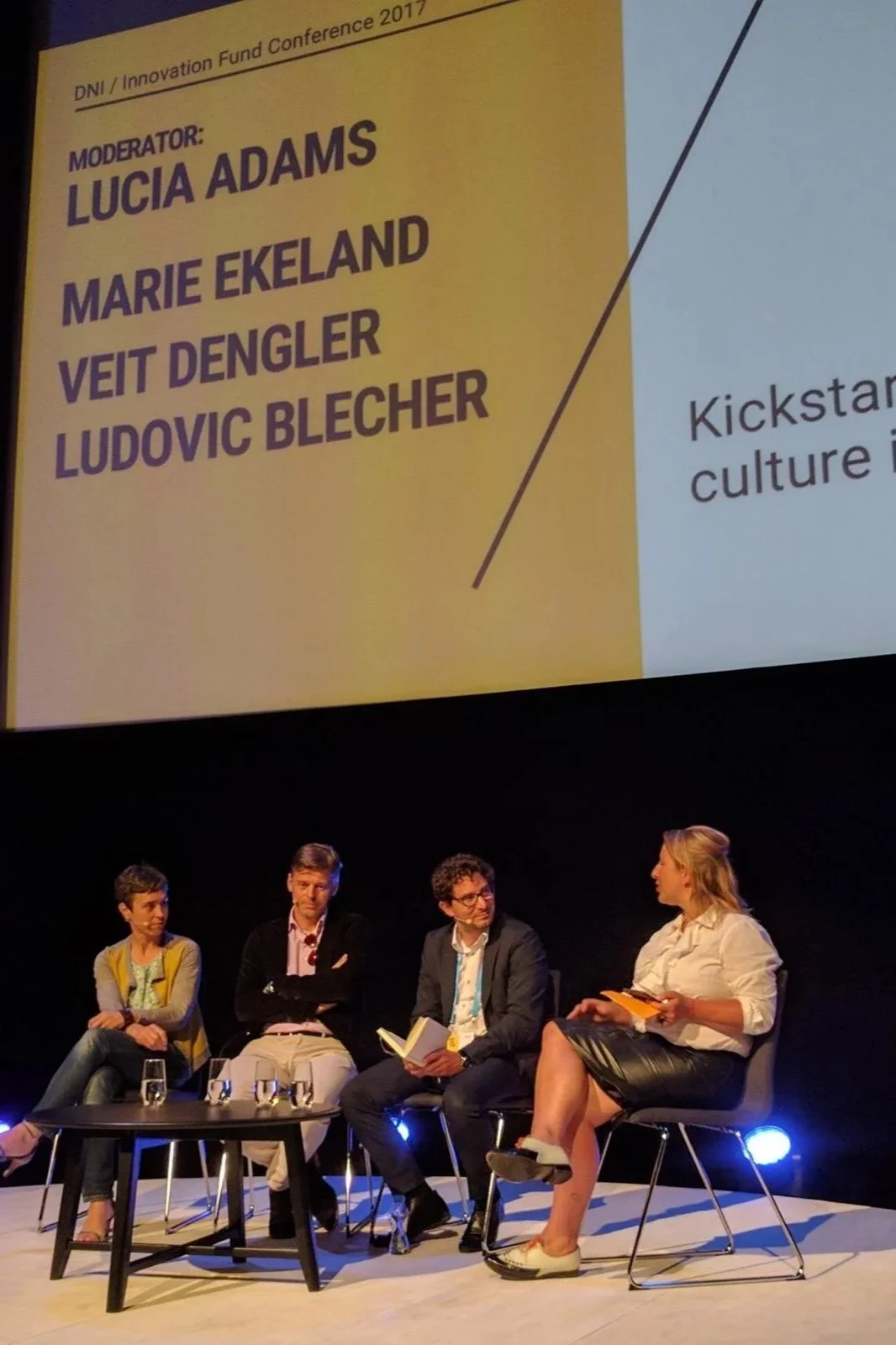
October 3-7 | Starting at $500Lucia Adams brings energy, insight and some rip roaring tales to media, podcast and live audiences.
The back story (get a cuppa - it’s long)
Lucia Adams has spent 25 years in rooms where things were actually at stake. The Times. Bauer. Conde Nast. She was not advising on the change. She was in it. She burnt out doing it. She now helps boards see what that costs before finance does. Sharp, funny, and forensically inconvenient, she has a gift for naming the thing the room has been carefully not saying, and making that feel like relief rather than a threat.Lucia played a key leadership role in making a 250-year-old newspaper fit for the digital age. The Times membership model, the first in UK national press, was not a technology project. It was existential level disruption and our response was an attempt to save an institution by changing the relationship between journalism, readers and the economics of the trade... and doing so while the industry watched. The Times ended up generating its first digital profit in thirteen years. It also generated the early version of a question that has followed her ever since: what does it actually cost the people who carry a change like that? From there, the thread continued. Bauer Media Group, where she designed and led Springboard, a 500-person organisational change programme built inside the company's largest restructure. Conde Nast, where she led a technology rollout across sixty global markets and discovered, early, that the problem on her desk was never the technology. The i newspaper, through acquisition. Informa Tech, Cisco, The Old Vic. Different sectors. Different scales. Different decades. The same pattern in the numbers, and the same gap between what appeared on the strategy slide and what it was actually costing to carry it. 25 years in the nerve centre of transformation after transformation Lucia's experience at the coalface, at the moment of maximum pressure, is what forged her insights into what really goes on under the bonnet of success stories, failures and everything in between.
In her client work now, she brings that lived experience: Not advising from theory alone or from the outside. There is a meaningful difference, and it is where this work begins. In 2020 she burnt out. She called it ambition for several years before she had a more accurate word for it. That is not a confession. It is the qualification. She learned to read the thing she had missed in herself by living through it at the same time as she needed to help other people with it. That combination, of operational depth and hard personal knowledge of what happens when the system runs out, is where The Bold Margin came from.
The Bold Margin is her practice. It works with boards and founders on the cost that doesn't show up in the accounts until it has already been paid. Most organisations run two P&Ls. One they manage, and one they don't, until the people delivering it stop. The second one is what she is interested in. She calls it the Shadow P&L: the accumulated cost of misread capacity, unresolved conflict, depleted leaders, and roles that have quietly changed shape around the people holding them. It is quantifiable. It is readable, if you know what to look for. And it reliably appears on the budget before it appears on a slide.
Her diagnostic tool, The Margin Read, identifies which of seven pressure patterns a leader is currently running, and what that pattern is costing the organisation. Not personality. Not burnout in the clinical sense. A read of the current state, before it becomes a crisis. The seven types, Running Hot, The Hangover, In the Bunker, Over-Functioning, All Weather, The Wall, and Drift, are built on the intersection of Weick's sensemaking theory, Maslach and Leiter's research on the six conditions of worklife, and Antonovsky's salutogenic framework. Drift is structurally distinct from the others: it catches leaders whose orientation has quietly become misaligned with the role the organisation actually needs, driven by the speed of structural change rather than any individual failure. The AI-driven role liquidity moment has made this the most live type in the current cycle.
She holds EMCC senior practitioner coaching accreditation and brings a particular specialism in conflict resolution at senior level: the conversations boards and leadership teams have been postponing, and the cost of that postponement appearing as delivery drag, attrition, and decisions made slightly worse than they needed to be.
As a speaker and commentator, she works the territory between organisational performance and human conditions with a journalist's eye for the observable fact and a practitioner's impatience with the abstract. She has contributed to national newspapers, and her work has been cited in media and leadership contexts across the UK. Her writing is data-anchored and practitioner-voiced: not theory dressed as insight, but pattern recognition developed across two and a half decades of rooms where things were actually at stake.
She speaks, leads workshops, joins debate panels, and runs board-level diagnostic days on the following themes: the Shadow P&L and the cost of invisible capacity depletion; the seven leader types and how to read the pressure patterns in your senior team before they become performance events; the human cost of AI-driven role disruption, and the specific leadership crisis of Drift; and the Employment Rights Act 2025 as the moment the shadow P&L stops being invisible and starts having a legal price tag.
She is available for keynote engagements, ThinkIn-style debate formats, podcast conversations, conference panels, board development days, and research partnerships on the intersection of leadership capacity, organisational performance, and the human conditions that drive or stall both.
Based in London. Founder, The Bold Margin.
Find my media profile on MuckRack.
She comes armed with a trove of stories from 25 years of steering organisations through their sliding doors moment, where futures were formed, and assess were on the line.
Lucia's experience at the coalface - deep in the nerve centre of transformation after transformation - is what forged her insights into change at the moment of maximum pressure. The success stories, the failures and everything in between.
She burnt out doing it, collecting some neurodivergent diagnoses along the way.
She now helps boards see what this costs before finance does.
Sharp, funny, and forensically inconvenient, she has a gift for naming the thing the room has been carefully avoiding, and making it feel like relief rather than a threat.
Pitches, Podcasts, Presentations, Prose and Passion Topics
Need a Speaker With a Point of View? From Exhibition Hall Keynotes to Intimate After Dinner gigs - here’s what I leap out of bed for:
-
Your organisation is already paying for it. Finance just hasn't found it yet. The gap between what shows up in the accounts and what it is actually costing to run the place. Capacity depletion, unresolved conflict, depleted leaders. Quantifiable. Readable. Usually discovered in the exit interview, three years too late.ext goes here
-
Most organisations don't have a strategy problem. They have a capacity problem. Boards spend 40 minutes on the strategy slide and three on whether the people carrying the last strategy have anything left. That ratio is the actual constraint. A talk that reframes where performance really breaks down.
-
Every unresolved conflict was already a productivity tax. Tribunal claims up 57% year-on-year. Unfair dismissal claims up 72%. Six million more workers in scope from 2027. The Employment Rights Bill doesn't create the human margin problem. It prices it. Sharp, data-anchored, useful for HR, legal and board audiences.
-
Not burnout. Not underperformance. The role has quietly changed shape and nobody has said so. Rooted in Durkheim's concept of anomie. The most live leadership pattern in the AI-disruption moment. For audiences grappling with what happens to senior expertise when the job description quietly becomes fictional.
-
AI is not simply adding workload to existing roles. It is rewriting what those roles mean, which instincts hold, what expertise is worth. Leaders are performing jobs that have shifted around them. Most organisations have no language for this. Built on role-liquidity research, WEF Future of Jobs data, and Tushman and O'Reilly on the structural cost of asking leaders to run execution and lead invention simultaneously.
-
Individual symptoms are system signals. We keep treating them as personal failing. The Conde Nast sixty-market rollout: the most resistant people were not obstacles. They were the organisation's way of naming something that had not been named. A talk on how organisations keep solving the wrong thing, and what it costs them.
-
Boards are excellent at strategy. Decks are credible. Roadmaps are signed off. Investors are aligned. And then the people who have to deliver it quietly run out of road. This talk identifies where performance actually breaks down, why organisations keep misreading the signal, and what it costs them when they do.
-
The pressure paradox: the thing organisations do to drive performance is often the thing that destroys it. Applying pressure to people who are already out of capacity does not accelerate delivery. It produces excellent-looking work that is hollow underneath, and leaders who are quietly running on empty while performing being fine. A deliberately uncomfortable talk.
-
Senior team dynamics, the Drama Triangle, and the cost of avoidance. Real case study: a CEO and Sales Director standoff resolved in six weeks after six months of stalemate that cost a key hire, two months of product velocity, and a significantly harder board conversation than the original one would have been. For founders, chairs, and anyone who has sat in a room where something important was not being said.
-
Two and a half decades at The Times, Bauer, Conde Nast, and the i newspaper through structural change, acquisition, and digital disruption. What the media industry learned about human capacity the hard way, and why every other sector is now learning it on the same schedule.
-
…. is the word soft. 64,000 UK workers reported work-related stress in 2024. Up 24% in a year. This is not a wellbeing story. It is a capacity story in clinical clothing. On why the wellbeing agenda has been captured by HR and should be sitting with the CFO and the board.