

Not every problem arrives with a label
These are the ways you can work with me - and the kinds of situations each one is built for.

Executive Coaching
For leaders carrying more than the role should require
Some of the most capable leaders I work with are also the hardest to read from the outside. Output is strong. The team is holding. But something is running close to empty, and there hasn't been a moment to look at it properly.
Executive coaching is for the person who needs a trusted thinking partner. A place to explore what's actually happening under the surface - in the organisation, in the team, and in themselves - without performing okayness to get through the conversation.
I work with CEOs, founders, and senior leaders one level down: COOs, CPOs, MDs. People with significant responsibility for other people's performance, who rarely have anywhere to put the weight of it.
Sessions are one-to-one. The work is confidential. The focus is always on what's real, not what should be.
This might be the right fit if:
You’re leading multiple transformations at once and meeting resistance.
A relationship has become harder to navigate. Deep down, you know the conflict will only grow.
You’re grappling with complex people dynamics.
You're delivering but it's costing more and more.
You've been given some feedback, and you're not sure what to do with that.

Senior Team Enablement
For teams that have stopped working smoothly
Senior teams rarely fall apart dramatically. They tend to drift: a little less candour in the room, a little more corridor conversation, decisions that take longer than they should and land less cleanly than they used to.
By the time it's visible, it's usually been building for months.
I work with senior and leadership teams on the conditions that allow them to function well under pressure: how decisions actually get made, where disagreement has gone underground, what the team is collectively carrying that hasn't been named.
This might be a focused session, a structured sequence of work, or something built around a specific moment - a restructure, a merger, a leadership transition. The format follows the problem.
This might be the right fit if:
A key change is coming and the team needs to be in better shape to carry it.
Your senior team is aligned on paper but not quite in the room.
Trust has taken a knock and nobody has addressed it directly.
You want the team to have the conversation they've been avoiding.
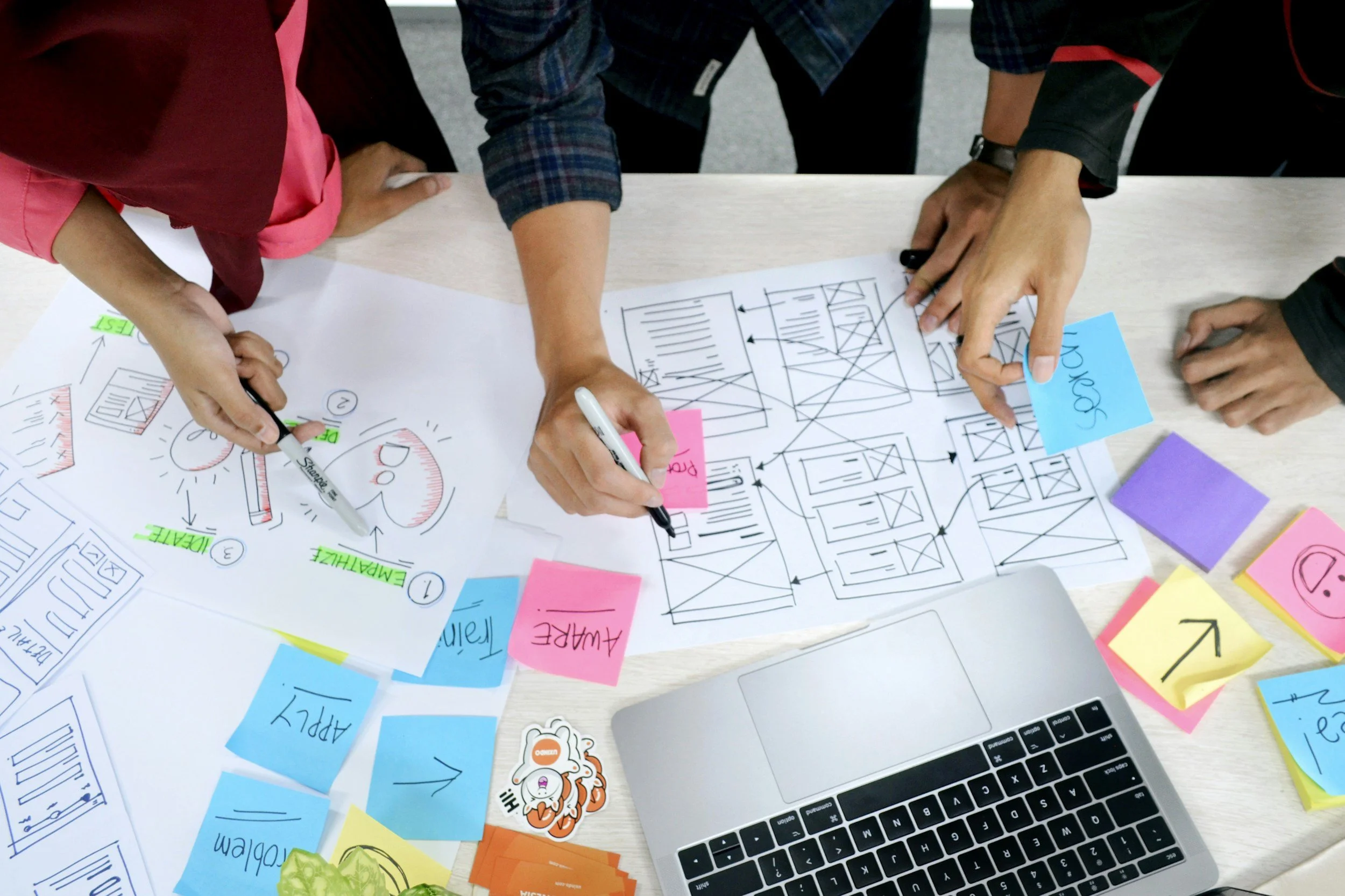
Change Programme Design
For organisations navigating significant change
Most change initiatives are designed around the mechanics: the timeline, the systems training, workflow, communications plan. What they tend to underinvest in is the human layer - the capability, the capacity, and the conditions people need to carry the change rather than have it burn them out.
I work with senior leaders and HR directors to design the people architecture that sits alongside structural change. That means getting clear on what the organisation is actually asking of its people, where the capacity gaps are, and what needs to be built for the change to hold.
My role is to design and enable, working with the leaders and teams who will deliver. I bring the architecture; the organisation brings the context and the continuity.
This might be the right fit if:
You're about to embark on a significant restructure and want the human layer designed properly from the start.
Your last change programme worked on paper and struggled in practice.
You're twelve months into a change programme and something isn't landing.
You need someone who can translate the strategic intent into what people actually need.
Coming Soon
Rising Rooted
A nature-based leadership reset for senior teams
Rising Rooted is a nature reconnection programme co-created with Nina Lovelace, founder of Hackney Outdoors CIC. It takes senior leadedrs out of the meeting room and into nature, using embodied experience, facilitated reflection, and deep conversation to restore what high performance depletes.
It is a one-day immersive experience designed for groups of 8 to 20. Fully tailored to the group and the season, available in London and beyond, and combines Lucia's background in senior leadership development with Nina's expertise as a Forest School Leader and Medical Herbalist in training.
The premise is straightforward. Sometimes the most productive thing you can do is stop. Not to retreat from performance, but to recover the capacity for bigger thinking, sharper judgement and real connection that sustained performance requires.
From the boardroom to the hedgerow.
What teams take away
Renewed energy, clarity and perspective
Stronger trust and connection across the team
Insight into sustaining high performance without depletion
Practical ways to embed reflection and resilience into how the team leads, day to day

The work varies. The starting point doesn't.
Whatever is slipping in your organisation, the first step is the same: reading what's actually there.